What Are The Common Fabric Dye Types And Textile Dyeing Techniques?
Textile dyeing is an essential process in textile processing. Mastering the basic knowledge of common fabric dye types and textile dyeing techniques can help us rationally select and use dyes, correctly formulate the dyeing process for dyeing processing, to obtain high-quality dyed textiles!
Fabric Dye Types And Textile Dyeing Techniques
Direct dyeing
Direct dyes can be used for dyeing various cotton products and viscose products. When dyeing, the fabric is first wetted with water, added to the dye solution, heated to 95 ℃, add neutral salt to promote dyeing, dyeing for 60min. After dyeing, washing, if necessary, add color-fixing agent treatment to improve the dyeing fastness. Silk dyeing often use high dyeing rate, good color fastness of direct dyes to supplement the lack of acid dyes chromatography, mainly brown, black, dark green and other divine colors. Dyeing can be carried out in a neutral or slightly acidic bath, often with salt to promote dyeing, after dyeing to improve the feel, can be treated in a dilute acetic acid bath for a period of time.
Vat dyes dyeing
Vat dyes have bright color, complete chromatography, good color fastness, and are high-grade dyes used for dyeing cellulose fibers. There are two different processes for dyeing with reducing dyes: colorless dip-dyeing and suspension rolling dyeing.
When colorless dip-dyeing, first use insurance powder (a strong reducing agent) and caustic soda to reduce the dyes into colorless body dissolved in the soda ash solution, and then put into the dyeing material, control the temperature and adjust the amount of salt to ensure the dyeing rate. After dyeing, oxidation treatment must be carried out to fix the colorless body on the fiber, and finally soaping is carried out to improve the color light of the dyed products and increase the color fastness.
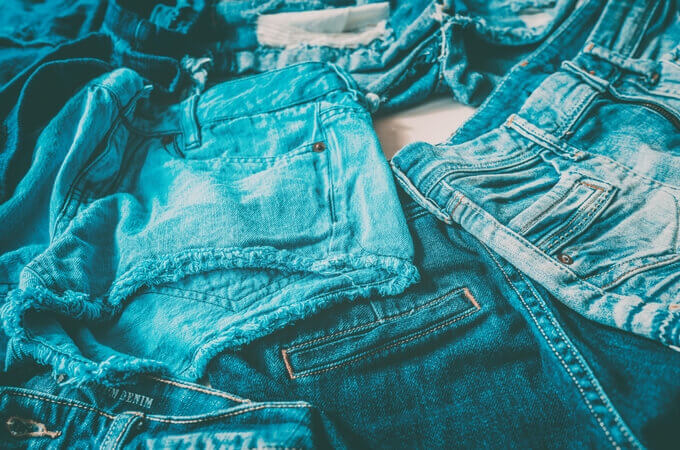
In suspension rolling dyeing, the dyes are not reduced, formulated into a suspension of fine particles of dispersion, dip-dyed on the fabric, and then dried, and then dipped and rolled in an alkaline reduction solution containing insurance powder, and then entered into a closed steamer to promote the reduction, dissolution, diffusion and penetration of the dyes, and finally oxidization and soaping. The most used reducing dye is indigo, which is mainly used in the processing of denim fabrics and garments.

Sulfur dyes dyeing
Sulfur dyes are commonly used to dye deep black and blue cotton textiles. The dyeing method is similar to that of reducing dyes, where the dyes are first reduced and then dissolved, and the color is developed by oxidation after dyeing. The reducing agent here is usually sodium sulfide, which is more easily oxidized than reducing dyes. In the case of cotton roll dyeing, for example, the fabric is dyed at high temperatures for a period of time in a dye-containment solution, then washed to oxidize, and finally treated with sodium acetate to resist brittleness.

Dyeing with insoluble azo dyes
Insoluble azo dyes are composed of two parts, color phenol and color base, and the dyeing process is actually two water-soluble components reacting on the fiber to produce insoluble color precipitation. Dyeing, the first fabric with color phenol alkaline solution dip rolling, commonly known as "bottoming", and then low-temperature drying, and then color base solution dip rolling color, and then washing soap. Through the air or steam for a certain period of time, and finally rinsed with water. Dyes can also be dyed by immersion dyeing method, can also be dyed by priming and color development of two steps.
Dyeing with reactive dyes
Reactive dyes contain reactive groups in the molecule, which can react with certain groups on the fiber to generate covalent bonds, with high washing and rubbing color fastness, and can be used for dyeing cellulose fibers, wool, silk, nylon and so on.
Dyeing of cellulose fibers: In the process of dip-dyeing and roll-dyeing, the fabric is usually treated with dye solution without alkali first, and then alkali is added to the dye solution or to the fabric to make the dye react with the dye. fibers, and finally, adequate washing, soaping and boiling to remove floating colors.
Wool, silk and nylon dyeing: Wool dyeing is usually carried out under acidic conditions, with acetic acid to regulate the PH value, metamizan as a retarder, neutralization, and washing after dyeing. Silk can be dyed under weakly acidic and neutral dyeing or alkaline conditions by different processes, or dyed first in a weakly acidic or neutral bath and then fixed in an alkaline bath. Nylon has fewer reactive groups than wool and silk, so it is difficult to dye dark colors with reactive dyes, and its dyeing process is similar to that of silk.
Acid dyes, acid mordant dyes, acid-containing mordant dyes for dyeing
- Acid dyes have a simple structure, and according to the size of the molecular structure, they can be divided into two categories: strong acid dyes and weak acid dyes. Strong acidic dyes can dye wool in strong acidic medium, bright color, good uniformity, weak acidic dyes can dye wool, silk, nylon in neutral or weak acidic medium, high color fastness, but uniformity and vividness is not as good as strong acidic dyes.
- Acid mordant dyes have the basic structure of acid dyes, but also contain groups that can form complexes with mordant chromium ions. These dyes are mainly used for wool dyeing, the color fastness under washing and sunlight is better than acid dyes, but the color is darker. Dyeing is often done by immersion dyeing, and potassium dichromate is used as a mordant for a period of time after dyeing.
- Dyes containing acid mordants are easy to apply because they do not require a mordant for dyeing. When chromium ions are complexed with dye molecules 1:1, the dyeing effect is similar to that of strong acid dyes and is mainly used for wool, whereas when chromium ions are complexed with dye molecules 1:2, the dyeing fastness is higher but the color is darker, and it is often used for neutral bath dyeing of wool, silk and nylon.
Disperse dyes for dyeing
Disperse dyes are the main dyes for dyeing synthetic fibers, especially polyester fibers, with good dyeing performance and high color fastness for polyester.
Disperse dyes do not contain ionized genes in their structure, they are non-ionic hydrophobic dyes, insoluble in water, and can only be suspended in the form of particles in the dye solution. Disperse dyes have simple structure and small molecules, they have affinity for hydrophobic polyester fibers with compact structure, and can diffuse into the interior of fibers with high dyeing rate.
Disperse dyes have a simple structure, small molecules, and an affinity for hydrophobic, tightly structured polyester fibers, enabling them to diffuse into the interior of the fibers and have a high dyeing rate. Dyeing polyester with disperse dyes requires high temperature conditions above 120°C because only at high temperatures is the degree of thermal movement of the polyester macromolecular chain sufficient to produce the gap required for dye diffusion.
There are three types of disperse dyes for dyeing polyester: carrier method, high temperature and high pressure method, and hot melt method. The high temperature and high pressure (HTHP) method is the most commonly used method. Dyeing is carried out in a closed high-pressure container at a temperature of up to 130°C. The dyeing rate is high, and acetic acid and leveling agent can be added to assist the dyeing in order to control the color light and dyeing. Uniformity of dyeing.
Cationic dyes for dyeing
Cationic dyestuff is the main dyestuff for acrylic dyeing, which not only has bright color and high dyeing rate, but also has good color fastness. Since acrylic macromolecules contain acidic groups, which are negatively charged after ionization in water, they have a strong adsorption capacity for cationic dyes, fast dyeing speed and high dyeing rate.
The dye migration of cationic dyes on acrylic resin is poor. Due to the fast dyeing speed, uneven dyeing is easy to occur, so the dyeing process must be strictly controlled and dyeing agents must be used. Commonly used dye migration agents include acetic acid, methylamine powder, cationic surfactants and so on. Dyeing generally adopts immersion dyeing method, with acetic acid and other adjustments to the dye solution PH = 4.5, and add dyeing migration agent, starting from room temperature, strict control of the speed of warming, continuous dyeing for a period of time. Boil for a certain time, and then slowly cool and wash. There are also modified polyester fibers that can be dyed with cationic dyes.
About Dynasty Chemicals
Dynasty Chemicals, with its common fabric dye types and superior textile dyeing techniques, is not only committed to giving vivid colors to textiles, but also focuses on stability and controllability during the dyeing process. Our products are backed by advanced technology to provide our customers with a superior dyeing experience. In this competitive market, we pride ourselves not only on the richness of our colors, but also on the reliability and consistency of our dyeing process from start to finish.
When you choose Dynasty Chemicals fabric dyes, you're not just choosing superior quality, you're choosing a sustainable partner. Our team maintains a keen eye on the marketplace and continually seeks to innovate to meet the needs of our customers in an ever-changing marketplace.
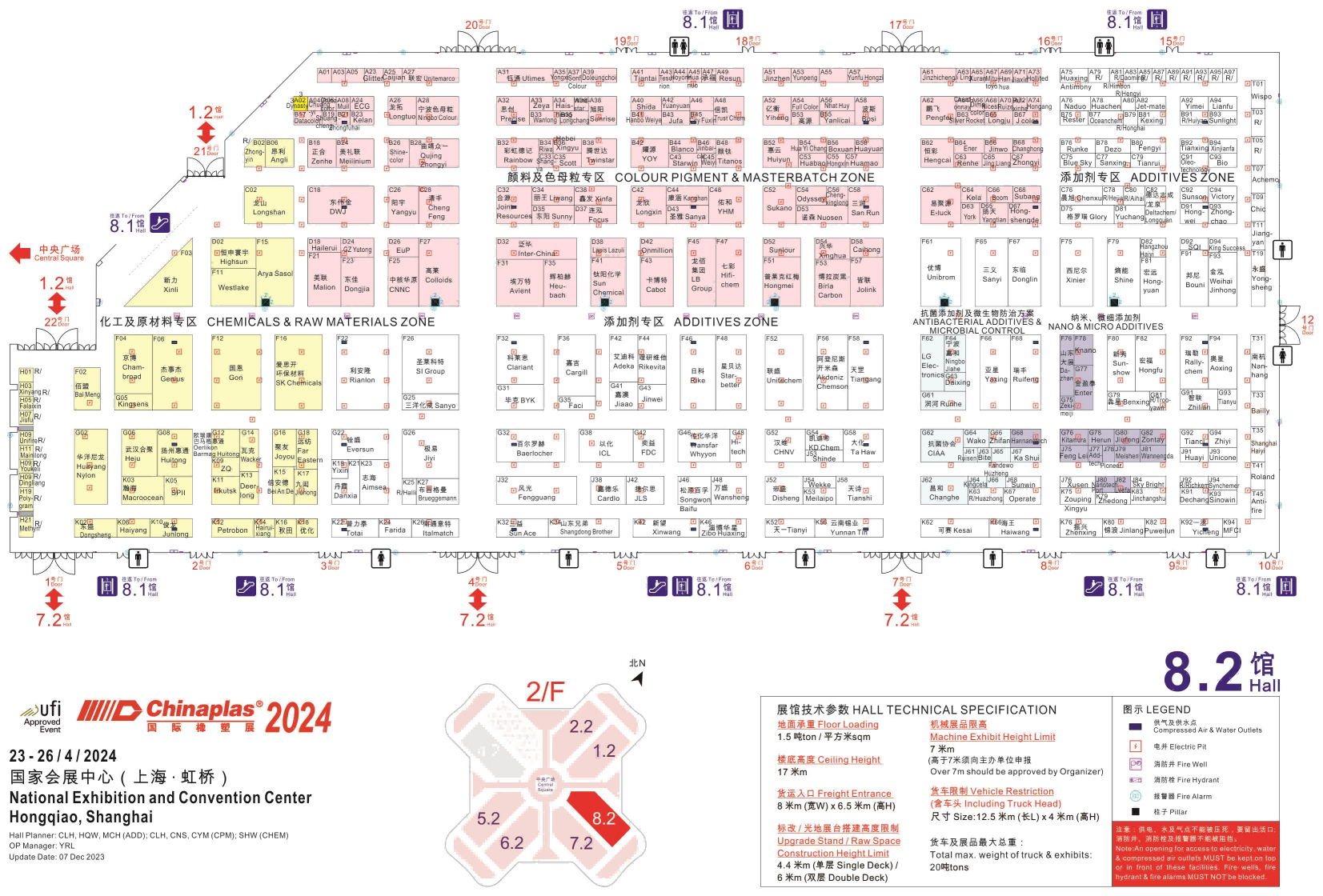 Dynasty Chemicals @ Chinaplas 2024, Shanghai
 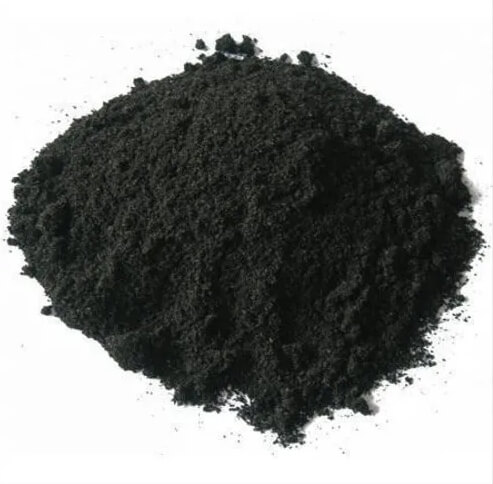 Versatile Uses of Acid Black Dyes
 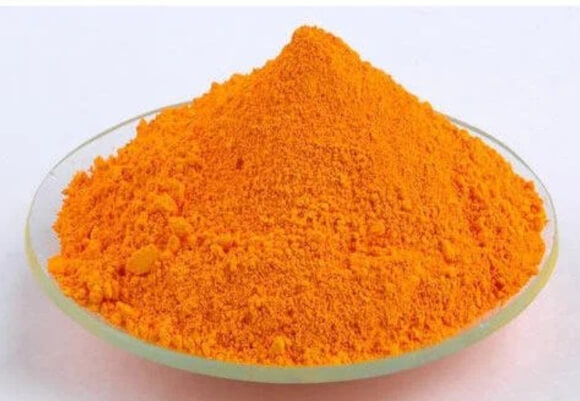 Classification and Application of Vat Orange Dyes
  Chemical Properties of CAS 9002-89-5
  Wool Yarn Dyes Demystified: The Mystery of the Art of Color
  How Do Synthetic Textile Dyes Differ From Natural Textile Dyes?
  Behind Colorfast Dyes: The Science of Lasting Color
  Insights Into Dye For Denim Jeans
  Sustainable Environmentally Friendly Dyes For Textile
  What Is Polyvinyl Alcohol Used For
  Discover the Multiple Uses of Sulphur Dyes
  Basic Knowledge of Cationic Dyes
  Vat Dye Dyeing Process
  Eco-Friendly Properties of Acid Dyes
  What is the difference between mordant and vat dyes?
 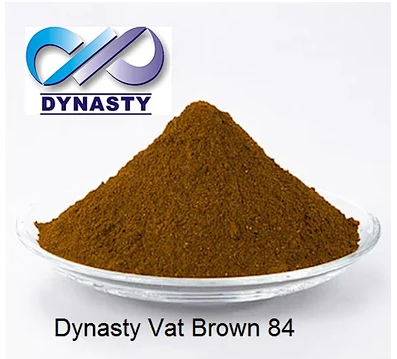 What is dispersed dye and what are the classifications of dispersed dyes
  Classification and Selection Principles of Dyes
 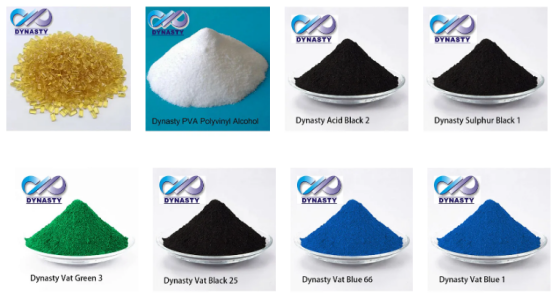 How to choose dyes for your industry?
 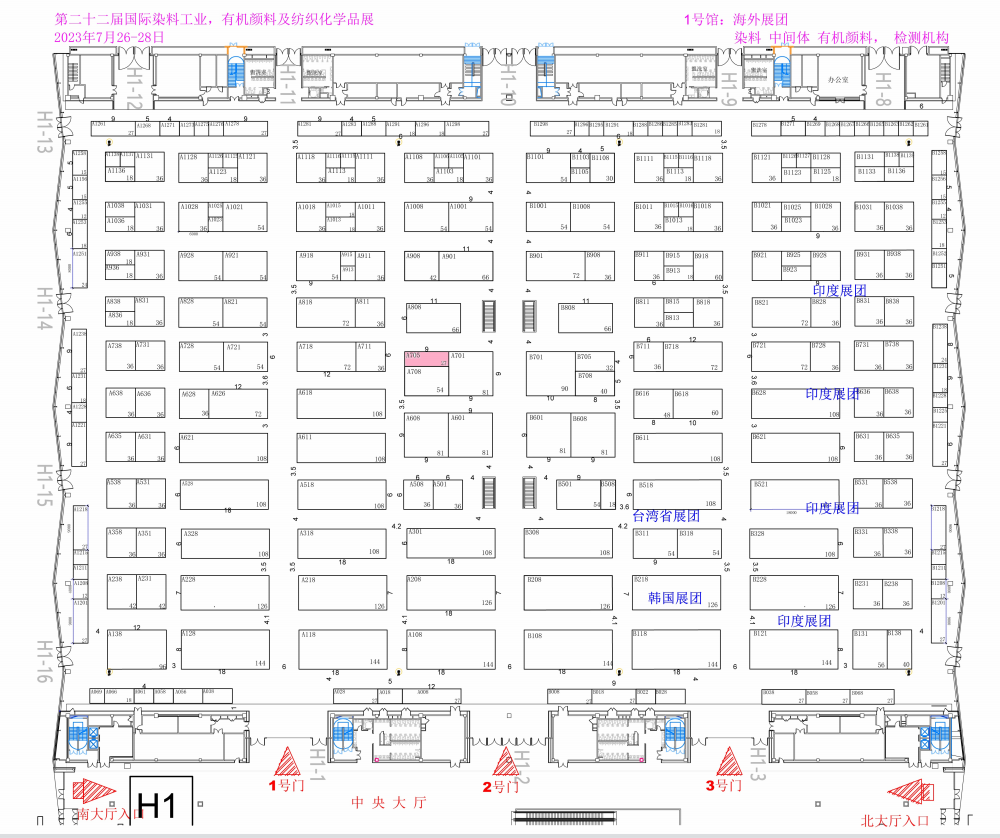 2023 Dynasty Chemicals @ China Interdye 2023, Shanghai
  The History and Development of Dyes